

We’re in the thick of the Fall trade show season, and for many technology companies, this constitutes the pinnacle of networking, brand awareness and lead generation. When it comes to ensuring you gain enough attention to get attendees to stop and engage at your booth, there is nothing quite like a well-planned booth attraction.
I’ve managed sponsorships at dozens of trade shows and participated in dozens more as an attendee. At a previous organization, while managing our Dreamforce sponsorship for four years we were able to 6x the amount of badge scans from year one to year four. I certainly have my favorites when it comes to booth draws. I’ve seen what works and what doesn’t. Below, I’ve graded 10 common trade show booth attractions and given honest feedback based on real-world results.
1. Caricature Drawings
A live caricature artist sketches attendees while they wait, giving them a personalized souvenir to take home. It’s a proven way to create a crowd because people naturally stop to watch someone being drawn.
The biggest advantage is the experience itself. Caricatures are fun, memorable and highly visible, making them particularly effective for companies with a playful or approachable brand personality. The problem is that the artist can only work so quickly. Long wait times can discourage attendees, and only a relatively small percentage of your booth visitors will end up receiving a drawing. Quite possibly there will also be a logistical concern if the artist or drawing area is positioned outside the booth, reducing the likelihood that booth staff can engage with those being drawn. Add in the cost of the artist and this can become an expensive way to generate relatively limited engagement.
Grade: C
2. Charging Stations
A charging station gives attendees a convenient place to recharge their phones, laptops or tablets during the show. At a long conference, that can be a genuinely valuable service.
The benefit is that it solves a real problem. A well-branded charging station can turn your booth into a welcome relief stop in a crowded exhibit hall, and attendees waiting for their devices can provide an opportunity for conversation. However, given the extended charging times, there will not be a big guest turnover, resulting in fewer total engagements
Charging stations can also attract attendees who are interested in a seat and an outlet rather than your product. And because many trade shows now provide charging areas, the attraction isn’t especially unique. It’s practical, but generally too passive to be a compelling booth draw by itself.
Grade: B
3. Cornhole Game
Cornhole is a simple beanbag-toss game that requires little explanation and encourages attendees to participate immediately. It brings movement and energy to a booth and can create an inviting, informal atmosphere.
Its biggest strength is its low barrier to participation. People can play a quick game while having a casual conversation with your team, and the equipment can be branded with your company logo. Prizes can also be tied to your brand or product theme.
The downside is space. Cornhole requires a relatively large playing area, often right at the front of the booth, which can make it harder for people to enter. It also tends to work better for casual or approachable brands than the more ‘corporate’ brands.
Grade: B
4. Food & Drink in the Booth
From popcorn machines and specialty drinks to espresso bars and other refreshments, food and beverages can create a steady stream of traffic. After several hours walking around a trade show, attendees are usually happy to see something they can eat or drink.
The draw is obvious. Free food works. It can attract tired or hungry attendees, and branded cups, napkins or packaging can provide additional visibility. It also creates a natural opportunity for your team to strike up a conversation with those waiting in line.
However, food can be expensive, particularly given that you’ll most likely have to go through the convention center vendors and their prices are not cheap. It can also attract freebie hunters who have little interest in your company. Then there are the practical issues like spills, crumbs, sticky hands and discarded cups and napkins. Food can generate traffic, but you need to make sure that traffic translates into meaningful engagement.
Grade: B
5. Gumball Machine
A gumball machine is a surprisingly effective old-school prize mechanism. Attendees turn the handle and receive a surprise, with different colored gumballs potentially corresponding to different prizes.
One of its biggest advantages is its simplicity. A gumball machine is compact, eye-catching and relatively inexpensive to operate. The element of surprise creates curiosity, while color-coded gumballs allow you to control the number and value of prizes distributed.
You can pass out your gumball machine tokens during breakout sessions and at other strategic locations throughout the convention, extending the attraction beyond your booth. We’ve even given a handful of tokens to our partners’ booth staff to help encourage cross-booth traffic.
Most importantly, the process creates a natural engagement opportunity. People waiting to use the machine can interact with your staff, giving your team a chance to begin a conversation. A drawback is that your staff will have to actively monitor and refill the machine throughout the show, but that’s a relatively minor investment compared with many other attractions.
Grade: A
6. Headshots
Offering free professional headshots can be a significant draw, particularly in the LinkedIn era. A quality headshot is something many business professionals genuinely value and will happily exchange their contact information to receive.
The challenge is throughput. Photography takes time, so lines can quickly develop, and in my experience the photographer, backdrop, and equipment often require space outside the primary booth area. This can move attendees out of your booth which defeats the purpose of developing conversations. Additionally, hiring a professional photographer adds considerable cost. After the show, someone must also manage the process of delivering the images.
Grade: C+
7. Inflatable Dice
Oversized inflatable dice provide a highly visible, quick-play attraction. Attendees throw the dice for a chance to win a prize, creating a simple activity that can be repeated quickly throughout the show.
The visual impact is one of its biggest advantages. Large dice can attract attention from across the exhibit hall, and the winning die combinations can be adjusted to control prize odds and costs. They can also work particularly well with trade shows in entertainment-oriented destinations such as Las Vegas.
The primary concern is space. Like cornhole, the activity generally occupies the front of the booth and can restrict access. It also requires supervision for safety and may not align well with an ultra-formal technology brand. Branding opportunities are somewhat limited as well.
Grade: B
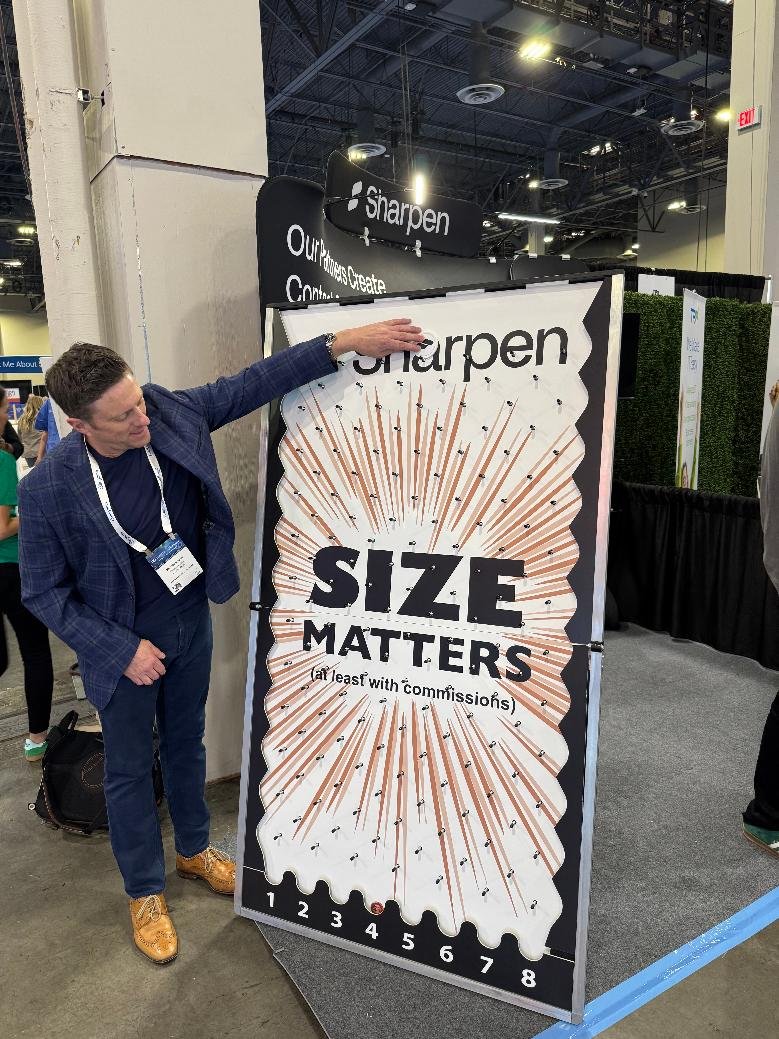
8. Plinko Board
The Plinko board, made famous by The Price Is Right, is one of the most recognizable trade show games. Attendees drop a puck down a vertical board and watch it bounce toward a prize slot.
This attraction scores highly because it combines visibility, excitement and speed. Gameplay is quick, which keeps lines moving, and the anticipation of watching the puck fall creates energy that can attract other attendees. The prize structure can also be adjusted to manage your giveaway budget, and the board itself can be branded for your company.
Perhaps most importantly, the line becomes an engagement opportunity. Your team has time to talk with attendees while they wait to play. A high-quality board can also be reused at future events, spreading the investment across multiple shows.
The primary downside is cost. Larger, higher-quality units can be expensive to rent or purchase, and someone needs to actively manage the game and the flow of attendees.
Grade: A
9. Raffle Drawing or Business Card Bowl
The business-card raffle is probably the oldest booth attraction on this list. Attendees drop their business card into a bowl for a chance to win a prize that will be awarded later.
Its advantages are hard to argue with: it’s inexpensive, easy to set up and requires virtually no technology or logistical planning. If you need something at the last minute, it can certainly serve a purpose.
But there’s a reason it receives the lowest grade on our list. It’s boring, passive and uninspired. The concept has been used at trade shows for decades, and it creates little energy or excitement. More importantly, putting a business card in a bowl doesn’t mean someone is interested in your product. You can easily walk away with a large collection of unqualified leads. What’s more, many professionals don’t even carry business cards with them anymore.
Grade: D
10. Spinning Prize Wheel
The spinning prize wheel is another trade show classic. Attendees spin the wheel and receive whatever prize corresponds to where it lands.
The wheel has several things going for it. It’s visually appealing, immediately understandable and relatively easy to brand. Prize values can be tiered, and the spinning itself creates a small burst of excitement. Like Plinko and the gumball machine, the waiting period gives your team an opportunity to engage attendees before they take their turn.
The problem is novelty. Prize wheels have been around trade shows for a long time, so attendees have likely seen plenty of them. While they can still generate traffic, they don’t necessarily provide the same curiosity or excitement as a less-common attraction. And, of course, someone needs to actively manage the game.
Grade: C+
The Bottom Line: The Attraction Is Only Half the Strategy
A great trade show attraction can get someone to stop at your booth and engage, increasing the odds the become a qualified lead. For tech companies in particular, the best booth attractions are those that create a natural bridge between the activity and a meaningful business conversation. That’s why the highest grades here went to attractions such as Plinko and the gumball machine, because they provide a compelling reason to stop while also creating opportunities for your team to interact with attendees. Conversely, something like a business-card raffle may collect contact information, but it does little to create an actual relationship.
What has worked for you? What booth attractions have you seen generate real engagement, and which ones have been complete duds? Share your experiences and let us know if you agree or disagree with our grades.
No responses yet